
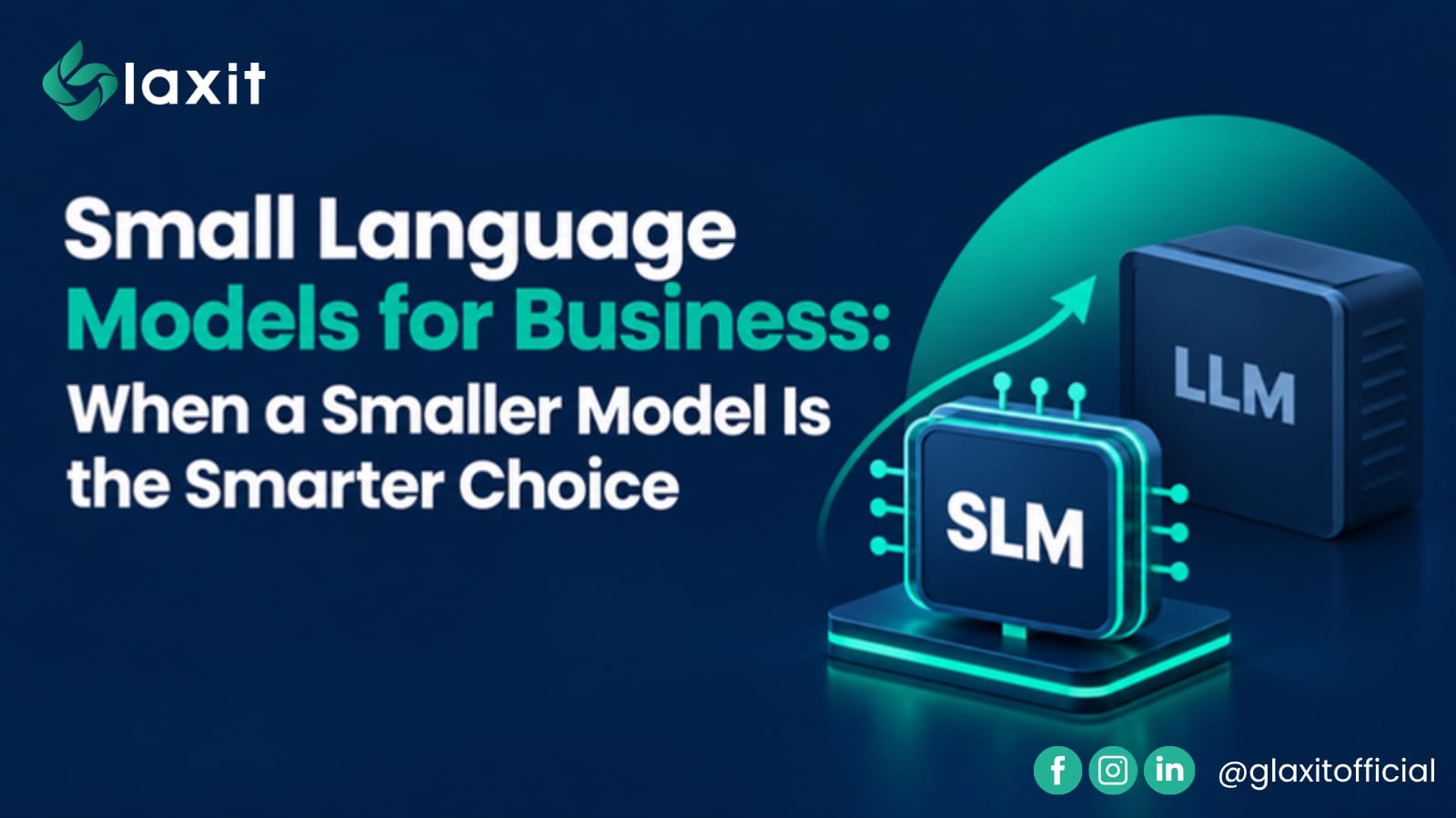
What is a small language model?
A language model is AI that reads and writes text. Big models are general-purpose. They can write, reason and answer questions on almost any topic, but they need a lot of computing power.
A small language model is lighter. It is often trained or tuned for a specific type of work, so it can be quick and efficient at that job. Think of a specialist instead of a generalist.
When a small model is the smarter choice
A small model usually fits when:
- The job is narrow and repeats every day
- You need quick answers at high volume
- You want to keep sensitive data on your own systems
- You want to keep running costs under control
A big model usually fits when the job is open-ended, needs broad knowledge, or changes every time. Costs and speed vary a lot between models and setups, so treat these as starting points, not rules.
Picture this. A support team sorts every incoming ticket into billing, delivery or technical. The categories rarely change and the volume is high. A small model trained on past tickets can do this sorting quickly. The team then keeps the big model for the rare, complicated complaint that needs real reasoning.
Jobs where small models often work well
- Tagging and sorting support tickets
- Routing emails to the right team
- Pulling names, dates and amounts out of documents
- Writing short summaries
- Answering common customer questions
That last one is where many businesses start. A focused assistant for common questions is often a good first project, and Glaxit’s chatbot services cover exactly this kind of work.
Jobs that still need a big model
- Long, open-ended reasoning
- Writing from scratch with a lot of nuance
- Unusual situations the model hasn’t seen before
- Tasks that need broad general knowledge
Why privacy is part of the choice
Some small models can run on your own servers or on a device, so sensitive data may never leave your systems. That matters for customer records, contracts and health or finance information. It depends on the model and its license, so confirm the details with your provider before you assume it.
How to test before you decide
Do not choose from a demo. Run a simple test instead:
- Pick one narrow job, such as tagging support tickets.
- Collect 50 to 100 real examples and write down the correct answer for each.
- Run a small model and a big model on the same examples.
- Compare accuracy, speed and total cost, including setup and hosting.
- Add a person to review the mistakes before anything goes live.
If you would like help setting up a test like this, Glaxit’s machine learning team can work through it with you.
Common mistakes to avoid
- Choosing a model because of hype
- Testing on made-up examples instead of real ones
- Counting only the price per request and ignoring setup, hosting and review
- Letting the model work with no human checking
- Using one model for every job
Frequently asked questions
What is a small language model?
It is an AI model that reads and writes text but is smaller than the giant general-purpose models. It needs less computing power and is often used for narrow, repeated jobs.
Are small language models cheaper than large ones?
Often, but not always. Compare the total cost, including setup, hosting and review, before you decide.
Are small language models less accurate?
On broad, open-ended tasks, often yes. On narrow tasks they are built or tuned for, they can do as well. Test them on your own data.
Can I run a small language model privately?
Some can run on your own servers or devices. This depends on the model and its license, so check before you choose.
Next steps with Glaxit
Not sure which model fits your business? Talk to Glaxit. Explore our machine learning services and data science services, or see how our chatbot services can put a focused assistant to work for your team.